
 Written by: Vrege Kolokossian
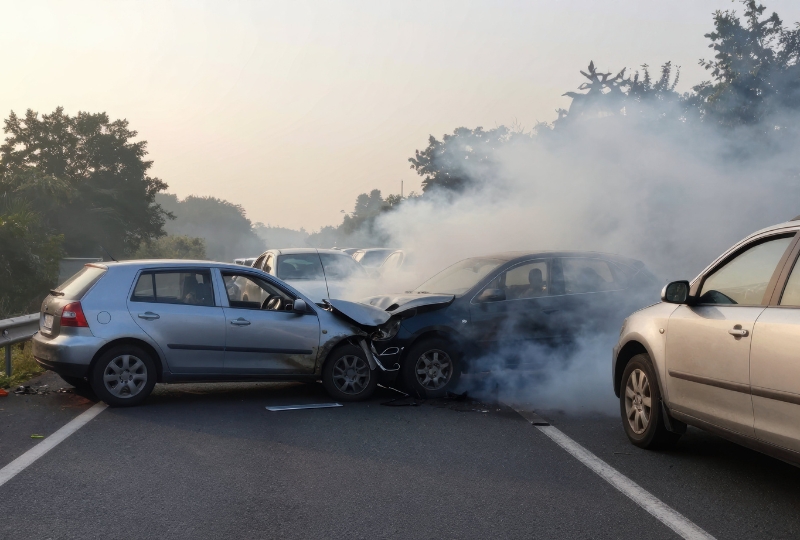
 If you’ve been injured in a motor vehicle accident, you may be entitled to make a CTP insurance claim. It is important to understand how CTP claims work (and what compensation may be available) to protect your recovery and your financial future.
This March 2026 guide provides clear, practical information about how CTP claims work and who can make a claim. It also explains the types of compensation available, the common pressure points in the process, and when it may be important to seek legal advice to protect your entitlements.
What is a CTP insurance claim?
A Compulsory Third Party (CTP) claim (also known as a CTP claim) is made when someone is injured in a motor vehicle accident due to another person’s negligence.
CTP insurance is mandatory for all registered vehicles in Australia. Its purpose is to ensure that people injured in road accidents have access to compensation for medical expenses, lost income, and other injury-related losses, regardless of the at-fault driver’s financial position.
CTP covers personal injury only. It does not cover damage done to vehicles or property. Claims are made against the insurer of the at-fault vehicle, and the specific rules, benefits, and time limits vary between states and territories.
Am I eligible for a CTP claim?
You may be eligible for a CTP personal injury claim if you were injured in a motor vehicle accident and another person was partly or entirely at fault.
Eligible claimants commonly include:
- Drivers
- Passengers
- Motorcyclists
- Pedestrians
- Cyclists.
You may still be entitled to claim even if the at-fault driver was uninsured or cannot be identified, such as in a hit-and-run accident.
Find out how much you can claim today
What you need to know about CTP compensation payouts
Although CTP compensation is designed to support people injured in motor vehicle accidents, the process is rarely straightforward. Insurers are commercial entities, and their role includes assessing—and sometimes challenging—different aspects of a claim.
These challenges can:
- Delay payment
- Reduce entitlements
- Create uncertainty about what you’re actually entitled to receive.
Understanding the common pressure points in CTP claims helps you identify when your compensation may be at risk. More importantly, it highlights when legal guidance can protect your position and ensure the insurer’s decision is properly scrutinised.
Pressure points in CTP claims
Your medical assessment overlooked key injuries | One of the most significant hurdles in a CTP claim involves how your injuries are assessed. In NSW, your whole person impairment (WPI) rating determines not only the value of certain benefits, but also whether you meet the 10% threshold required to claim pain and suffering damages. If injuries are overlooked, downplayed, or assessed prematurely, the outcome can substantially reduce your compensation. These assessments are not always final. They can be challenged with appropriate medical evidence and review pathways. |
Resistance to funding treatment and surgery | While CTP insurers are required to cover reasonable and necessary treatment, disputes can arise about whether particular care is justified. Requests for surgery, specialist treatment, or extended rehabilitation are sometimes declined on the basis that they are “not reasonable” or “not related” to the accident. When this happens, injured people are often left managing pain or deterioration without support. These decisions can be reviewed and overturned, but doing so requires careful preparation and supporting evidence. |
Settling before the full impact is known | Some injuries worsen over time. Chronic pain conditions, psychological injuries, and spinal damage, for example, may not stabilise for many months. If a claim is resolved too early—or based on outdated medical evidence—future complications may not be reflected in the settlement amount. Ensuring your claim properly accounts for both your current condition and likely long-term prognosis is critical to protecting your entitlements. |
Allegations of contributory negligence | Insurers may argue that you were partly responsible for the accident. Even a finding of partial fault can reduce your compensation proportionally. These allegations are not uncommon and are often raised during negotiations. However, liability assessments can be disputed. Independent evidence, witness accounts, and accident reconstruction material can all play a role in challenging unfair reductions. |
Get a free claim check
What does a CTP claim cover?
A CTP compensation claim may provide financial support for immediate and long-term injuries. These can include personal injury liabilities from motor vehicle accidents, such as:
- Medical and hospital expenses
- Rehabilitation and physiotherapy
- Pain and suffering compensation
- Lost income
- Lump sum damages for permanent impairments
- Travel expenses related to treatment
- Home care for injured drivers, passengers, pedestrians or cyclists.
It does not include damage done to vehicles or property.
Important note
CTP insurance schemes vary significantly across Australian states and territories. In Victoria, TAC operates a largely no-fault scheme, meaning injured people can access benefits regardless of who caused the accident, with limited rights to sue for common law damages. In Queensland, the CTP scheme is primarily fault-based, requiring you to establish another driver’s negligence in order to recover compensation beyond statutory benefits. Because each scheme has different eligibility thresholds, benefit structures, and time limits, it’s important to understand the laws that apply in your state before beginning the CTP car accident compensation process.
What if I was partly at fault?
You may still bring a CTP claim even if you were partly at fault, but your compensation may be reduced. This is because insurers and courts can apply contributory negligence — where your own actions are held to have contributed to the accident or your injuries.
Factors that may reduce your entitlement include:
- Not wearing a seatbelt at the time of the collision
- Riding a motorcycle without appropriate protective gear
- Speeding or driving too fast for conditions
- Failing to take reasonable care under the circumstances.
Where contributory negligence applies, the court will assess what percentage of responsibility you share for the incident and reduce your compensation accordingly.
Legal insight: Example contributory negligence scenario
In Bevan v Coolahan, a matter in which we acted for the plaintiff, the court closely examined issues of contributory negligence. The claim ultimately resulted in a relatively modest award due to the plaintiff’s share of responsibility.
The plaintiff was a passenger in a vehicle driven by a provisional driver who she knew was affected by drugs and unfit to drive. She had also voluntarily participated in drug use in the vehicle and was not wearing a seatbelt at the time of the accident. The court found that these circumstances materially contributed to the injuries she sustained and reduced her damages to reflect her level of responsibility.
Step-by-step: How the CTP claims process works
Although CTP procedures vary across states, most claims follow a broadly similar sequence. Understanding these steps can help you protect your entitlements and know when to seek legal advice.
1. Seek medical attention
Your health is the top priority. Early treatment ensures all injuries are properly documented, which is crucial for your claim. This applies in all states, including NSW, VIC, and QLD, as proper medical evidence forms the foundation of any CTP claim.
2. Report the incident to police
If the accident caused injury, you must notify the police. You can report online or at your nearest station. In NSW, QLD, and VIC, a police report is a legal requirement to make a CTP claim and in NSW it must be made within 28 days. For some VIC TAC and QLD CTP claims, specific reporting forms may be required.
3. Notify the CTP insurer
Strict time limits often apply for notifying the insurer of your claim. Early notification is generally required to access statutory benefits, which can cover medical treatment and lost wages. In NSW and QLD, this is essential in a fault-based scheme, while VIC TAC’s no-fault system also requires prompt notification to access early support.
4. Insurer investigation
The insurer will review who was at fault, the severity of your injuries, and whether they meet the relevant criteria. This may include independent medical assessments arranged by the insurer. VIC’s no-fault system focuses more on treatment and support, whereas NSW and QLD assess fault to determine liability.
5. Statutory benefits phase
Depending on the state, you may receive early benefits for treatment, rehabilitation, and lost income. In VIC (TAC) and some NSW cases, benefits are available without needing to prove fault. In QLD and other fault-based states, early benefits may still be provided, but full compensation often requires establishing the at-fault party’s liability.
6. Common law or lump sum compensation
If eligible, you may pursue lump sum compensation for future treatment needs, economic loss, pain and suffering, and loss of enjoyment of life. In NSW and QLD, these claims are fault-based, while VIC allows limited common law claims if statutory thresholds are met.